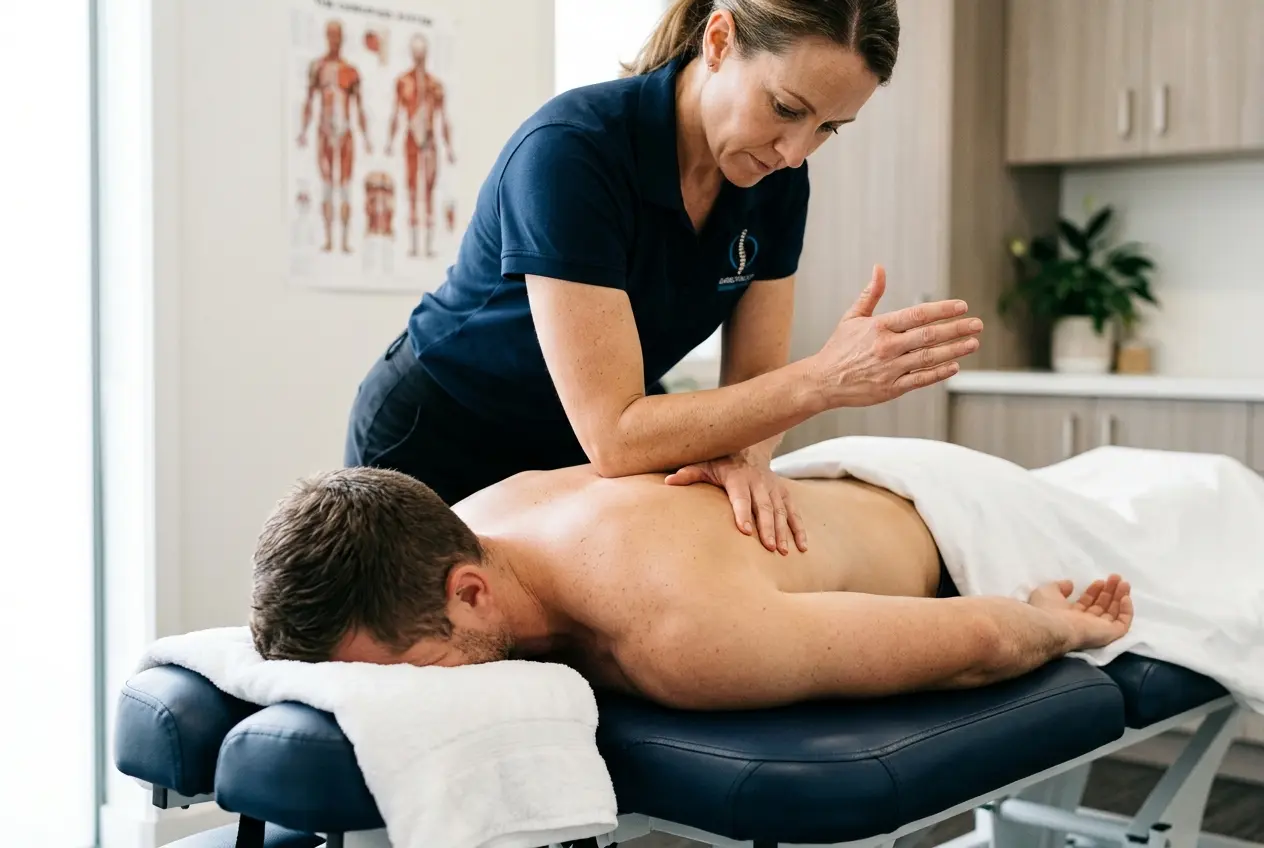
Our myofascial release techniques address the deep muscle tension common among Boulder's active population. Whether from repetitive climbing motions, cycling posture, or stress from Boulder's competitive work environments, we target restricted fascia with specialized methods.
Therapists use a combination of manual techniques and specialized tools to release adhesions in overworked muscle groups. We pay special attention to areas like the IT bands of runners, rotator cuffs of climbers, and hip flexors of cyclists.
Treatment plans incorporate both in-office therapy and self-care techniques you can use at home or at Boulder's many recreation centers. We teach patients to recognize early signs of fascial restriction before they lead to pain or limited mobility.
Many patients combine this with adjustments for comprehensive care, especially when preparing for major events like the Boulder Ironman or after intense training cycles. Sessions are scheduled longer than typical adjustments to allow thorough tissue work.
Therapists use a combination of manual techniques and specialized tools to release adhesions in overworked muscle groups. We pay special attention to areas like the IT bands of runners, rotator cuffs of climbers, and hip flexors of cyclists.
Treatment plans incorporate both in-office therapy and self-care techniques you can use at home or at Boulder's many recreation centers. We teach patients to recognize early signs of fascial restriction before they lead to pain or limited mobility.
Many patients combine this with adjustments for comprehensive care, especially when preparing for major events like the Boulder Ironman or after intense training cycles. Sessions are scheduled longer than typical adjustments to allow thorough tissue work.
Our Process
- 01 Step 1: Assessment of muscle tightness and fascial restrictions
- 02 Step 2: Identification of primary tension patterns
- 03 Step 3: Application of targeted release techniques
- 04 Step 4: Post-treatment stretching and home care instruction
Benefits
- Breaks down scar tissue and adhesions
- Improves muscle elasticity and range of motion
- Reduces compensatory movement patterns
- Enhances effectiveness of chiropractic adjustments
Frequently Asked Questions
Is myofascial release painful?
While some discomfort is normal when releasing tight areas, we always work within your tolerance level. Boulder athletes often describe it as a 'good hurt' that leads to significant relief.
How does this differ from massage?
Where massage focuses on general muscle relaxation, myofascial release targets specific restrictions in the connective tissue. The techniques are more focused and therapeutic, often addressing root causes of recurring pain.